Key Takeaways:
- ✓ Colorado law requires disclosure of ALL known code violations on the Seller's Property Disclosure form
- ✓ You can legally sell a house with code violations—but buyers must be informed
- ✓ Cash buyers regularly purchase properties with open permits and unpermitted work
- ✓ Fixing violations can cost $2,000 to $50,000+, while selling as-is means $0 upfront costs
- ✓ Denver, Aurora, and Colorado Springs each have specific enforcement processes
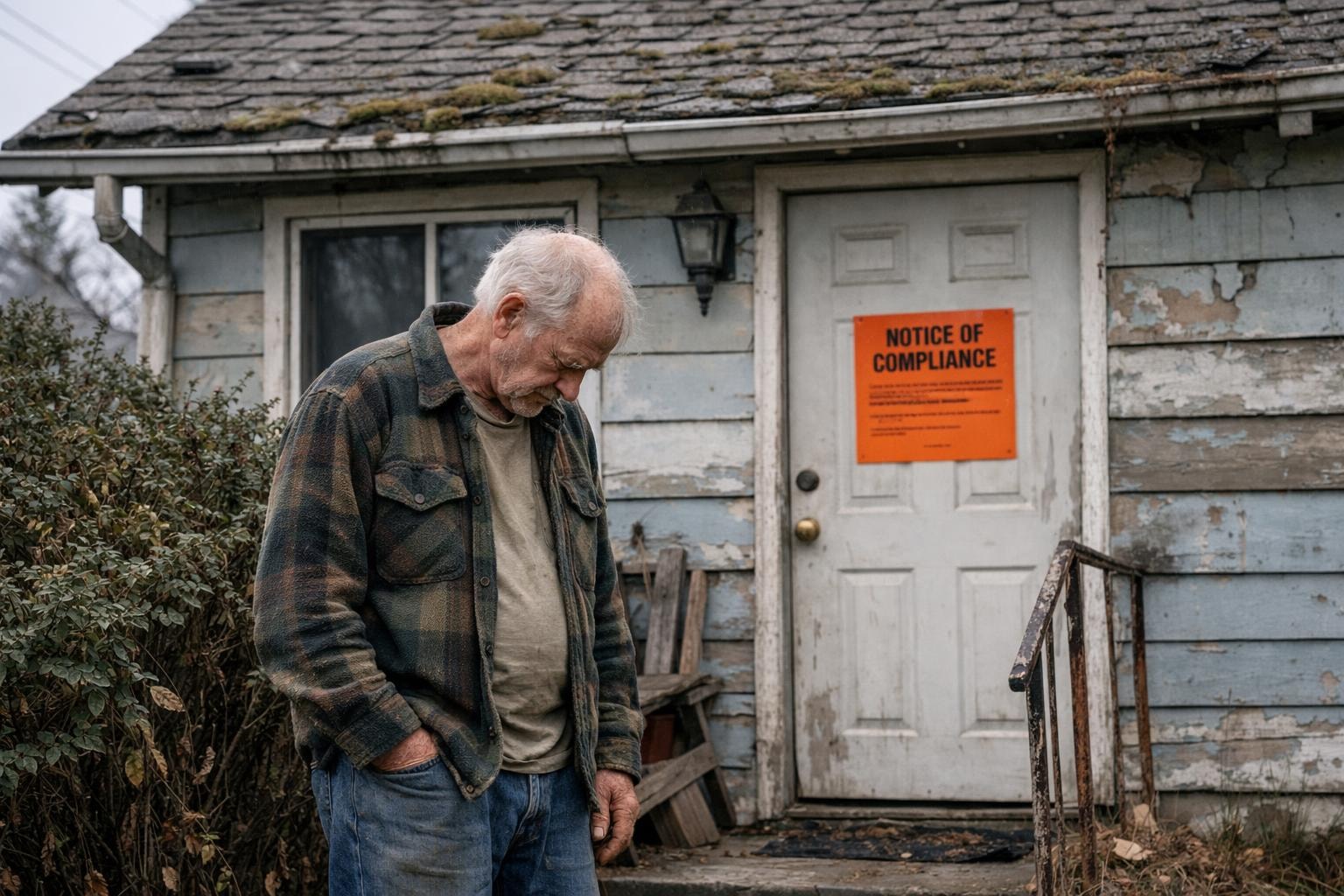
Code violations create real obstacles for Colorado homeowners. Traditional buyers may walk away. Lenders won't finance non-compliant properties. And bringing everything up to code can cost tens of thousands of dollars you don't have. But here's what most sellers don't realize: you have options beyond expensive remediation.
Important: We are real estate investors, NOT licensed real estate agents. This guide provides educational information to help you understand your options for selling a house with code violations in Colorado.
Facing code enforcement pressure and need to sell quickly? Get a no-obligation cash offer on your property—even with open permits or violations.
Common Code Violations in Colorado Homes
The most common residential code violations in Colorado include unpermitted additions, DIY electrical work, finished basements without egress windows, and HVAC installations without permits. These issues often surface during pre-sale inspections or when permit records don't match the property's current configuration.
Unpermitted Additions and Alterations
Room additions without permits represent the most common violation we encounter. A previous owner finished the basement. Someone converted the garage to living space. The deck got rebuilt without paperwork.
Common examples include:
- Basement finishes (especially pre-2000 homes)
- Garage conversions to bedrooms or living space
- Room additions or bump-outs
- Covered patios converted to enclosed rooms
- Attic conversions to living space
Electrical and Plumbing Violations
DIY electrical work ranks among the most dangerous—and most frequently cited—violations in Colorado homes. Panel upgrades, outlet additions, and rewiring projects require permits and licensed contractor work in most municipalities.
Watch for these common violations:
- Electrical panel upgrades without permit
- Additional circuits or outlets (especially in garages or basements)
- Water heater replacements (yes, these need permits in Colorado)
- Bathroom additions or modifications
- Kitchen remodels with plumbing changes
Safety Code Violations
Safety violations often appear during routine inspections, even when the homeowner had no idea they existed. Colorado's current building codes require specific safety features that older homes may lack.
The most common safety violations include:
- Missing or improperly installed smoke and CO detectors
- Bedrooms without compliant egress windows
- Handrails and guardrails below current height requirements
- Missing GFCI outlets in kitchens, bathrooms, and garages
- Improper bedroom window sizes
Structural and HVAC Issues
Load-bearing wall modifications without engineering approval create serious liability. HVAC replacements and roof work without permits add to the problem.
- Load-bearing wall removals or modifications
- Furnace or AC unit replacements without permit
- Roof replacements without permit (required in many jurisdictions)
- Foundation modifications
- Structural beam additions or changes
Colorado Disclosure Requirements for Code Violations
Colorado law under the Seller Property Disclosure Act (C.R.S. § 38-35.7) requires sellers to disclose known code violations on the Seller's Property Disclosure (SPD) form. Failure to disclose can result in actual damages plus court costs. This applies whether you're selling traditionally or as-is.
The Seller's Property Disclosure Form (SPD)
Every residential real estate transaction in Colorado requires the seller to complete the Seller's Property Disclosure form. The Colorado Real Estate Commission provides the standard form, and it specifically asks about code violations.
The SPD form asks:
- "Are you aware of any building code, city, or county violations that have not been corrected?"
- "Are you aware of any additions or alterations made without necessary permits?"
- "Are there any current zoning violations or non-conforming uses?"
- "Are there any open or expired building permits?"
Your answers must be truthful. "As-is" sales don't exempt you from disclosure requirements—they simply mean you won't make repairs.
What Exactly Must You Disclose?
You must disclose what you actually know. Colorado law doesn't require you to conduct investigations, but you can't hide information you possess.
Disclosure obligations include:
- Any violation notices you've received
- Unpermitted work you know about (even if done by previous owners)
- Open building permits that were never closed
- Code enforcement cases (active or resolved)
- Information previous owners disclosed to you
- Work you personally did without permits
Legal Consequences of Non-Disclosure
Under the Seller Property Disclosure Act (C.R.S. § 38-35.7), sellers who fail to disclose known material defects can be liable for actual damages plus court costs.
Non-disclosure risks include:
- Post-sale lawsuits from buyers who discover violations
- Liability for the buyer's remediation costs
- Potential fraud claims in egregious cases
- Real estate commission complaints if agents were involved
Have Code Violations? We Buy Properties As-Is
Open permits, unpermitted work, active enforcement cases—we buy houses with all types of code issues. Get a fair cash offer in 24 hours.
Get My Cash Offer →The Code Enforcement Process in Colorado
Understanding how code enforcement works helps you make informed decisions. Denver, Aurora, and Colorado Springs each handle violations differently, but the basic process is similar across the Front Range.
Denver Code Enforcement (CPD)
Denver's Community Planning and Development (CPD) department handles building code enforcement. Violations typically start with a complaint or inspection discovery.
Denver's enforcement process:
- Complaint or Discovery: Neighbor complaints, insurance inspections, or permit reviews trigger most cases
- Notice of Violation (NOV): Initial warning with timeline to correct (typically 30 days)
- Order to Comply (OTC): Formal order if NOV is ignored (stricter deadline)
- Fines and Penalties: Daily fines accumulate for non-compliance
- Lien Filing: Unpaid fines can become liens against the property
Aurora Code Enforcement
Aurora's Development Services department follows a similar escalation process. Aurora tends to provide reasonable correction timelines and works with homeowners on complex issues.
- Initial inspection and violation notice
- 30-60 day correction period (negotiable for complex issues)
- Re-inspection scheduling
- Civil citation for non-compliance
- Municipal court involvement for persistent violations
Colorado Springs Code Enforcement
Colorado Springs Regional Building manages code compliance in El Paso County's largest city. The department focuses on safety violations and major unpermitted construction.
Colorado Springs priorities include:
- Life-safety violations (egress, electrical, structural)
- Unpermitted additions that affect property records
- Occupancy violations (overcrowding, illegal units)
- Property maintenance code violations
Your Options: Fix vs. Sell As-Is
The decision depends on four factors: remediation cost, time available, property condition, and your financial situation. Here's how to analyze your options.
Decision Framework: Fix vs. Sell As-Is
| Factor | Fix Before Selling | Sell As-Is |
|---|---|---|
| Timeline | 2-6 months (permits + work) | 7-14 days possible |
| Upfront Cost | $2,000-$50,000+ | $0 |
| Sale Price Impact | Full market value potential | 10-20% below market |
| Buyer Pool | All buyers qualify | Cash buyers, investors |
| Risk Level | Work may reveal more issues | Certain, faster outcome |
When to Fix Code Violations Before Selling
Fixing violations before selling makes sense in specific situations:
- Violation is minor: Simple fixes under $2,000 (missing CO detectors, GFCI outlets)
- Strong market conditions: Premium pricing available in your neighborhood
- Plenty of time: 3-6 months available without carrying cost pressure
- Quality work exists: The unpermitted work is done well, just needs permit blessing
- You have capital: Funds available without borrowing
When to Sell As-Is with Code Violations
Selling as-is makes sense when remediation costs outweigh benefits:
- Major remediation required: Costs exceed $10,000 or are unknown
- Timeline pressure: Relocation, inheritance deadlines, or financial constraints
- Multiple violations: Scope of problems is uncertain or interconnected
- Property needs other work: Violations are just one of several condition issues
- Limited capital: You can't fund repairs without sale proceeds
- Active enforcement: City pressure makes quick sale advantageous
What Retroactive Permits Cost in Colorado
Retroactive permits in Colorado typically cost $500 to $2,000+ for the permit alone, but the real expense is bringing the work up to current code standards. Many homeowners discover that the permit fee is just the beginning.
Permit Fee Structures by Municipality
| Municipality | Base Permit Fee | Inspection Fees | Late/Penalty Fees |
|---|---|---|---|
| Denver | $200-$500+ | $50-$150 per inspection | Up to 2x base fee |
| Aurora | $150-$400+ | Included in permit | 50-100% surcharge |
| Colorado Springs | $100-$350+ | $50-$100 per inspection | Varies by violation |
The Hidden Cost: Bringing Work to Code
The permit fee is rarely the problem. The real cost is upgrading work to meet current code requirements.
Example: Basement Finish Retroactive Permit
- Permit application fee: $350
- Inspections: $150
- Egress window installation: $3,500-$6,000
- Smoke/CO detector hardwiring: $500-$1,000
- GFCI outlet upgrades: $300-$600
- Electrical panel upgrade (if required): $1,500-$3,000
Total: $6,300-$11,100 for a "simple" basement permit
Selling to a Cash Buyer with Code Violations
Cash buyers regularly purchase properties with code violations, open permits, and unpermitted work. Understanding why—and what to expect—helps you evaluate this option.
Why Cash Buyers Purchase Violation Properties
- No lender requirements: We don't need FHA, VA, or conventional financing approval
- Built-in renovation plans: We're already planning to update the property
- Permit process experience: We handle retroactive permits routinely
- Risk tolerance: We accept uncertainty that individual buyers won't
- Speed advantage: We can close before enforcement deadlines
Our Process for Violation Properties
When you contact Terra Capital about a property with code violations, here's what happens:
- Free property assessment: We evaluate the property, violations, and estimated remediation
- Permit history review: We pull permit records and identify open permits
- As-is offer: We provide a cash offer reflecting current condition
- Flexible closing: You choose the closing date that works for your situation
- Simple transaction: Standard title company closing, no repairs required from you
Frequently Asked Questions
What if I didn't know about unpermitted work when I bought the house?
You only need to disclose what you know. If the previous owner didn't tell you about unpermitted work and you genuinely didn't know, you're not required to disclose it. However, if you've since discovered the issue—through inspection, permit research, or city notice—you must now disclose what you've learned.
Can a buyer back out over code violations?
Yes, buyers can typically terminate during the inspection period for any reason, including code violations. Even if violations are disclosed upfront, buyers may not fully understand the implications until their inspector explains the costs.
Do I have to disclose violations the previous owner told me about?
Yes, absolutely. If a previous owner disclosed unpermitted work or violations to you—verbally or in writing—you must disclose this information to your buyer. The SPD form asks about your knowledge, and knowledge includes what others have told you.
What if I fix violations but can't afford permits?
Unpermitted repair of violations doesn't resolve the disclosure requirement. If you fix an electrical issue yourself without permits, you've now created a new unpermitted electrical modification. Proper remediation requires both the repair work AND the permits plus inspections.
Will my homeowner's insurance cover unpermitted work issues?
Most homeowner's insurance policies exclude coverage for unpermitted work. If a fire starts due to unpermitted electrical work, your insurer may deny the claim. This is one reason buyers care so much about permit compliance—insurance coverage is affected.
Can I sell during an active code enforcement case?
Yes, you can sell while an active code enforcement case is pending. You must disclose the active case to buyers, and the violation may follow the property to the new owner depending on how the lien/fine structure works in your municipality. Cash buyers experienced with these situations often purchase properties with active cases.
Next Steps: Selling Your Colorado Property with Code Violations
Code violations create challenges, but they don't make your property unsellable. You have options—and the right choice depends on your specific situation.
If you want to maximize price: Consider remediation if violations are minor, you have time, and you can afford the upfront costs.
If you want certainty and speed: Sell as-is to a cash buyer who handles code issues routinely. You'll receive a lower price, but you'll close in days rather than months, with zero out-of-pocket expense.
Whatever you decide, disclose everything. Colorado's disclosure requirements protect both you and your buyer. Accurate disclosure on the SPD form prevents post-sale disputes and legal liability.
About the Author: Eric Osakue is the founder of Terra Capital LLC, a Colorado real estate investment company based in Centennial. Terra Capital helps homeowners sell properties quickly for cash, including homes with code violations, unpermitted work, and other challenges that complicate traditional sales.
Disclaimer: This information is for educational purposes only and does not constitute legal, tax, or financial advice. Terra Capital LLC is a real estate investment company, NOT licensed real estate agents or brokers. Permit fees and remediation costs are estimates and vary by municipality. Consult a Colorado attorney for specific legal guidance regarding code violations and disclosure requirements.
Get a Cash Offer for Your Property
We buy houses with code violations throughout the Denver Metro and Front Range. Open permits, unpermitted work, active enforcement—no problem.