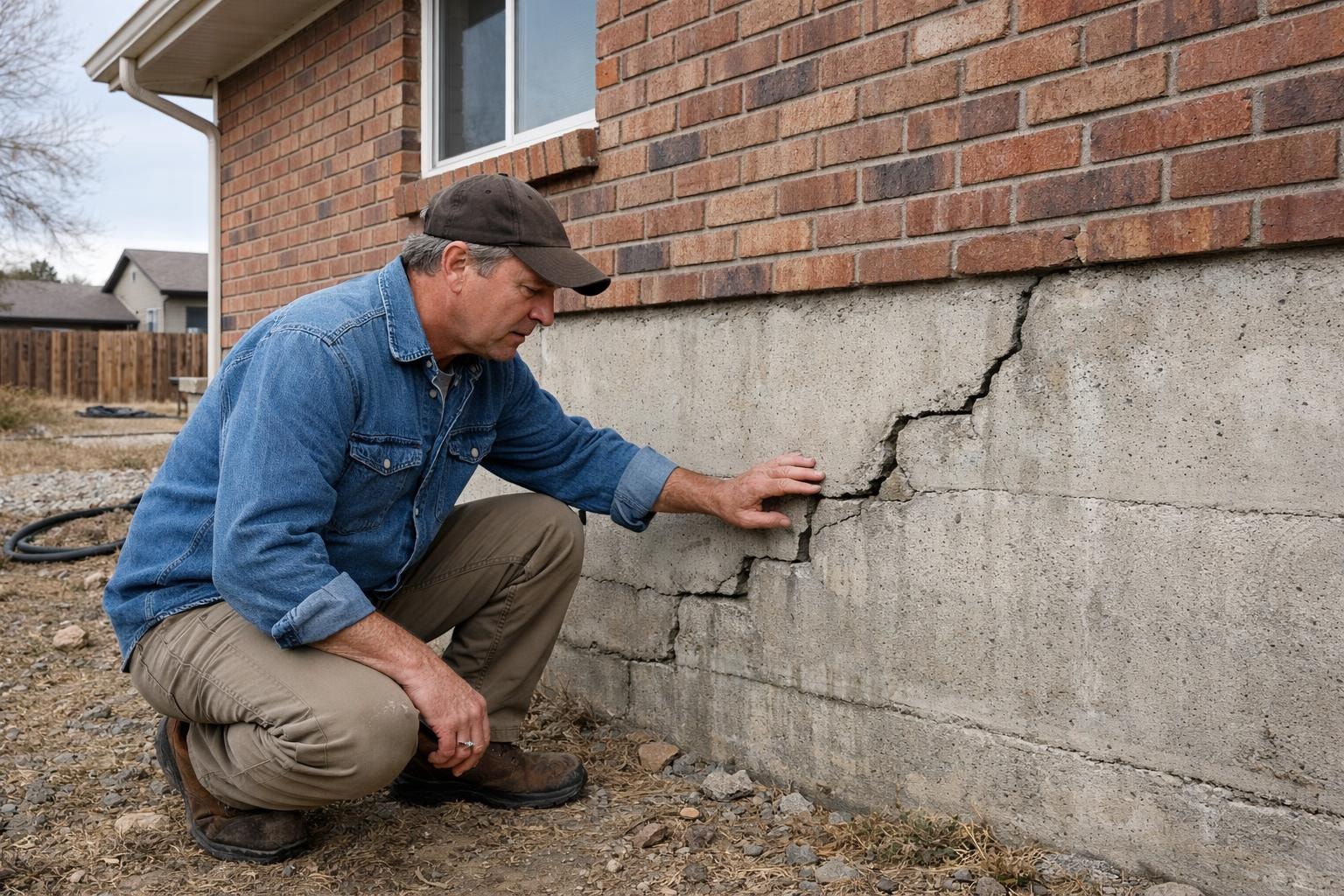
Key Takeaways:
- ✓ You can legally sell a Colorado home with foundation problems—you just must disclose them
- ✓ Foundation issues typically reduce home value by 10-25%, depending on severity
- ✓ Repair costs range from $2,500 to $8,500+ in Colorado, with major repairs exceeding $20,000
- ✓ Colorado law requires disclosure of known defects—hiding problems exposes you to legal liability
- ✓ Options include: repair before selling, sell with price reduction, or sell as-is to a cash buyer
Important transparency note: We are real estate investors, NOT licensed real estate agents or brokers. We buy houses directly in any condition, including those with foundation issues. This guide presents all your options fairly so you can make the best decision for your circumstances.
Ready for a no-obligation cash offer on your foundation-troubled home? Contact us today.
Why Foundation Problems Are So Common in Colorado
Foundation problems in Colorado aren't your fault—they're largely due to our state's unique expansive clay soils that can swell up to 30% when wet and shrink dramatically when dry, creating enormous pressure on your home's foundation.
If you're dealing with foundation issues, you're far from alone. Colorado's Front Range sits on some of the most problematic soil in the country for homeowners.
Colorado's Expansive Soil Problem
The culprit behind most Colorado foundation damage is bentonite and montmorillonite clay. According to the Colorado Geological Survey, these expansive soils are prevalent throughout the Front Range region:
- Dramatic expansion: These clays can swell up to 20-30% by volume when they absorb moisture
- Immense pressure: Expanding soil can exert pressure up to 30,000 pounds per square foot
- Seasonal cycles: Colorado's wet springs and dry summers create constant expansion/contraction
- Deep penetration: Expansive soils in Colorado can extend 15+ feet below the surface
Areas Most Affected in Colorado
While expansive soils exist throughout Colorado, certain areas experience more severe foundation problems:
- Front Range Hogback region - The geological formation running along the mountains
- Table Mountains area - Golden, Arvada, and surrounding communities
- East of the Hogbacks - Where ancient seabed deposits created massive clay concentrations
- Denver Metro hotspots - Aurora, Centennial, Parker, and Highlands Ranch
The Freeze-Thaw Factor
Colorado's climate compounds the soil problem. Our winter freeze and spring thaw cycles create additional foundation stress:
- Ground freezes in winter, pushing against foundations
- Spring thaw releases that pressure unevenly
- Summer drought causes soils to shrink and pull away
- Fall rains start the expansion cycle again
Signs Your Colorado Home Has Foundation Problems
Not all cracks indicate serious foundation problems—but some warning signs demand immediate attention. Hairline cracks under 1/8 inch are often cosmetic, while horizontal cracks and bowing walls signal structural concerns requiring professional evaluation.
Exterior Warning Signs
- Stair-step cracks in brick or masonry (following mortar joints)
- Gaps between window or door frames and the wall
- Visible foundation cracks, especially horizontal ones
- Chimney separation from the main structure
- Doors or windows that no longer close properly
Interior Warning Signs
- Diagonal cracks radiating from door and window corners
- Doors that stick or won't latch properly
- Uneven or sloping floors (the marble test: does it roll?)
- Gaps between walls and ceiling or floor
- Counters or cabinets pulling away from walls
Foundation Problem Severity Assessment
| Severity | Description | Repair Cost | Price Impact |
|---|---|---|---|
| Cosmetic | Hairline cracks under 1/8" | $500-$1,500 | 0-5% reduction |
| Minor | Cracks 1/8"-1/4", some door sticking | $1,500-$5,000 | 5-10% reduction |
| Moderate | Cracks over 1/4", noticeable floor slope | $5,000-$15,000 | 10-20% reduction |
| Severe | Horizontal cracks, bowing walls, water | $15,000-$40,000+ | 20-25%+ reduction |
Colorado Foundation Disclosure Requirements
Under the standard Contract to Buy and Sell Real Estate (Section 10) and Colorado common law, sellers must disclose all known latent defects—problems that aren't immediately obvious but affect the property's value or safety. This is typically done via the Seller's Property Disclosure (SPD) form.
Seller's Property Disclosure Form Requirements
The Seller's Property Disclosure (SPD) form specifically asks about:
- Structural conditions: Foundation, basement, and structural components
- Past repairs: Any work done to address foundation or structural issues
- Moisture: Water intrusion history in basements or crawl spaces
- Soil conditions: Expansive soils, drainage problems, or settling
Critical point: Selling "as-is" does NOT exempt you from disclosure. Even if a buyer agrees to purchase the property in current condition, you still must disclose known material defects to avoid potential fraud liability.
What About the "Soils Disclosure Statute"?
You may hear about the Soils and Hazard Analyses of Residential Construction Act (C.R.S. § 6-6.5-101). While this statute emphasizes the importance of soil conditions, it primarily applies to builders and new construction. However, for existing home sales, if you have original soil reports, engineering letters, or mitigation plans from when the home was built or repaired, you should provide these to buyers. Full transparency is your best protection against future lawsuits.
What Happens If You Don't Disclose?
- Rescission: Buyer can cancel the sale and recover their money
- Repair costs: You may be liable for all repair expenses the buyer incurs
- Fraud claims: Intentional concealment can lead to civil fraud lawsuits
- Legal fees: You'll pay your own attorney's fees and potentially the buyer's
Foundation Problems? We Buy Houses As-Is
Get a no-obligation cash offer in 24 hours. No repairs needed—we handle everything.
Get My Cash Offer →Should You Repair Before Selling? (Decision Framework)
Repair before selling when minor fixes cost less than $5,000 and restore more value than they cost. Sell as-is when repairs exceed $15,000, you lack time or capital, or the property has multiple issues beyond foundation problems.
When Repair Makes Sense
- Minor issues with repair costs under $5,000
- Hot seller's market where move-in-ready homes command premiums
- Value recovery exceeds cost—repair generates more equity than expense
- Time flexibility—you have 2-3 months for repairs before listing
- Capital available—you can fund repairs without hardship
When Selling As-Is Makes Sense
- Major repairs needed costing $15,000 or more
- Multiple property issues beyond just foundation
- Time pressure from relocation, inheritance, or life changes
- Repair costs exceed value recovery
- No capital available for upfront repair costs
Cost-Benefit Analysis Examples
| Scenario | Repair Cost | Value Increase | Net Benefit |
|---|---|---|---|
| Hairline crack repair + waterproofing | $3,000 | $8,000 | +$5,000 ✓ |
| Partial pier installation | $8,000 | $10,000 | +$2,000 ✓ |
| Full pier system | $15,000 | $12,000 | -$3,000 ✗ |
| Major structural rebuild | $40,000 | $25,000 | -$15,000 ✗ |
Options for Selling a House with Foundation Problems
You have three main options for selling a Colorado home with foundation issues: traditional sale with price reduction, repair before listing, or sell as-is to a cash buyer—each with distinct tradeoffs in proceeds, timeline, and certainty.
Option 1: Traditional Sale with Price Reduction
List your home on the market with full disclosure and a price that reflects foundation issues.
Pros:
- Potentially highest overall price
- Maximum exposure to buyers
- Market determines true value
Cons:
- Longer time on market (90-180 days typical)
- Deal fall-throughs common
- May need multiple price reductions
Option 2: Repair Before Listing
Fix the foundation problems, obtain warranties, and list at full market value.
Pros:
- Access to larger buyer pool including FHA/VA buyers
- Faster sale once listed (30-60 days typical)
- Transferable warranty provides buyer confidence
Cons:
- Upfront capital required ($2,500-$20,000+)
- Risk of discovering additional issues
- Some buyers still suspicious of past issues
Option 3: Sell As-Is to Cash Buyer
Sell directly to an investor who purchases properties in any condition.
Pros:
- No repairs, no cleaning, no preparation
- Fast closing on your schedule (7-14 days)
- Certain outcome—no financing contingencies
- Zero out-of-pocket costs
Cons:
- Lower price (typically 50-70% of after-repair value)
- Less competition for your property
| Factor | Traditional | Repair First | Cash Buyer |
|---|---|---|---|
| Net Proceeds | Highest potential | High | Lower but certain |
| Timeline | 60-180 days | 90-180 days | 7-14 days |
| Out-of-Pocket | $0 | Repair cost | $0 |
| Certainty | Low | Medium | High |
What Cash Buyers Offer for Foundation Problems
Cash buyers like Terra Capital calculate offers based on After-Repair Value minus repair costs, holding costs, and profit margin—resulting in offers typically ranging from 50-70% of current market value, depending on repair scope.
Example Offer Calculation
Let's say you own a home in Parker with foundation issues:
| After-Repair Value (ARV) | $450,000 |
| Foundation Repair Estimate | -$15,000 |
| Other Repairs Needed | -$20,000 |
| Holding Costs (6 months) | -$12,000 |
| Closing Costs | -$18,000 |
| Investor Profit Target | -$35,000 |
| Cash Offer | $350,000 |
Getting a Foundation Inspection in Colorado
Before selling any Colorado home with suspected foundation issues, invest $400-$800 in a licensed structural engineer's assessment—this professional opinion protects you legally and gives buyers confidence in your disclosures.
| Inspector Type | Cost | Best For |
|---|---|---|
| General Home Inspector | $300-$500 | Initial identification of issues |
| Structural Engineer (PE) | $400-$800 | Formal assessment with recommendations |
| Foundation Repair Company | Free | Repair estimates (but sales-driven) |
Frequently Asked Questions
Can I sell my house with a cracked foundation?
Yes, you can sell a Colorado home with foundation cracks. Minor cosmetic cracks rarely prevent sales, though significant structural cracks will reduce your buyer pool and price. Disclosure is mandatory regardless of crack severity.
How do I find the right buyer for a house with foundation issues?
Target investors and cash buyers who specialize in homes needing work. Traditional homebuyers often hesitate or can't get financing for foundation-damaged properties. Properties with foundation issues in the Denver metro typically attract investor interest quickly.
Do I need to disclose past foundation repairs?
Yes, Colorado law requires disclosure of past repairs. This is actually a positive—professionally repaired foundations with transferable warranties often sell better than properties with undisclosed or unaddressed issues.
How long does foundation repair take?
Foundation repair timelines range from 1-2 days for minor crack injection to 2-3 weeks for extensive pier installation. Factors include repair scope, weather conditions, permit requirements, and contractor availability.
What foundation problems are dealbreakers?
Very few foundation problems are true dealbreakers for the right buyer. Severe structural failure might eliminate traditional buyers, but investors purchase even severely damaged properties. Signs that concern even cash buyers include active sinkholes and condemned status.
Will foundation issues affect my closing timeline?
Foundation issues can significantly extend traditional sale closings. Buyer inspections lead to negotiations, repairs require time, and re-inspections add weeks. Cash sales avoid these delays entirely—we can close in as little as 7 days.
Next Steps: Selling Your Foundation-Troubled Home
Foundation problems feel overwhelming, but they don't make your Colorado home unsellable. Thousands of Front Range homes with foundation issues change hands every year. The key is choosing the right path:
- If you have time and want maximum value: List traditionally with full disclosure
- If you have capital and moderate problems: Consider professional repairs first
- If you want certainty without hassle: Contact Terra Capital for a no-obligation cash offer
When to Consult a Colorado Real Estate Attorney
If you're selling a home with foundation problems in Colorado, understanding your legal disclosure obligations is essential. Colorado law requires sellers to disclose known latent defects—hidden problems not easily discoverable through reasonable observation—and foundation issues caused by expansive soils clearly fall into this category.
Key legal considerations for Colorado sellers:
- Colorado Supreme Court precedent (Cohen v. Vivian, 1960) establishes that sellers who know about soil defects that affect foundations have a legal duty to disclose
- "As-is" clauses don't protect you if you have actual knowledge of foundation problems. Colorado courts have consistently held that sellers cannot hide behind as-is language when they know about hidden defects
- The Seller's Property Disclosure form is not enough. Under Gattis v. McNutt (2013), Colorado sellers have an independent disclosure duty beyond what's asked on the standard form
- Non-disclosure liability can be severe. Buyers may recover repair costs, consequential damages, and in cases of intentional concealment, treble damages
Consider consulting a Colorado real estate attorney if you:
- Have engineering reports documenting soil or foundation conditions
- Made previous foundation repairs you're unsure how to disclose
- Are uncertain what your disclosure obligations require
- Want to structure an as-is sale but have knowledge of defects
While cash buyers like Terra Capital purchase homes with foundation issues and handle disclosure complexity as part of our process, sellers considering traditional sales should understand their legal exposure. Proper disclosure protects you from future liability claims.
About the Author: Eric Osakue is Managing Member of Terra Capital LLC, a Colorado real estate investment company helping homeowners sell properties in any condition throughout the Denver metro area.
Disclaimer: This information is for educational purposes only and does not constitute legal, tax, or financial advice. Terra Capital, LLC is a real estate investment company, NOT licensed real estate agents or brokers. For specific legal questions about Colorado disclosure requirements, consult a licensed Colorado real estate attorney.
Foundation Problems? Get Your Cash Offer Today
We buy houses with foundation issues throughout the Denver metro area. No repairs, no hassle—just a fair cash offer.